We’ve Moved!
We’ve moved! The Center for Children’s Literature Blog has a new home on the Bank
Street website. Visit us at bankstreet.edu/ccl to stay up to date on monthly book picks,
award news, conferences, events, and more! Thank you for your continued support.
Children’s Book Committee – April 2019 Pick
A Heart In A Body In The World
Author: Deb Caletti

Annabell, 17, embarks on a cross-country run from Seattle to Washington DC in an attempt to outrun the pain from a terrible tragedy. Colorful illustrations and photos.
Our Young Reviewer Says:
A Heart In A Body In The World, by Deb Caletti, chronicles Annabelle Agnelli’s cross-country run from Seattle to Washington DC after she experiences a terrible tragedy. The story begins with a compelling narrative; simple yet deliberate, Caletti creates a text which one cannot relinquish. There are many words to describe this book; heart-wrenching; authentic; touching; but the one that I believe fits most is beautiful. The writing is beautiful, the facts regarding the subject of the book, the human heart, at the beginning of each chapter are beautiful. Yet what makes this book so truly incredible are the characters. In three hundred and fifty-five pages, Caletti creates an indelible personality. Annabelle is not merely relatable; she is a friend, she is a human being. I have never before so clearly understood a person and their motivations; never have I known a character so well.
Caletti’s novel is strikingly relevant in a country that is grappling with massacres such as Parkland and Columbine; it provides a narrative that is not one of the activist, it is one of an individual who has found herself in the spotlight, yet only wishes to mourn. Near the end of the book, when giving a speech on what had happened, protagonist Annabelle says of the nation, “It has not shown me that it will protect me, from males more powerful than me, from people who hate and intend to do harm. It has shown me that I am less than, that I am not worth being protected. It has shown recklessness with my well-being.”
A Heart In A Body In The World is a beautiful reflection on the world today, in a world that stands by during tragedies, but also a world with people like Annabelle Agnelli, like Emma Gonzalez and David Hogg, who use their voices because, as Caletti writes, one’s voice is “the only thing you have sometimes when someone or something is larger and more powerful than you.”Excellent book. It is different from other dinosaur books because it tells about just one kind of dinosaur and one skeleton. You learn about the whole process of finding and digging up the dinosaur.”
– Jane, 14 years old, Manhattan, NY.
Young people who are interested in reviewing are invited to do so as we welcome the individual perspective of our age appropriate readers. If you are interested in being a reviewer, contact bookcom@bankstreet.edu
See our past monthly picks.
Children’s Book Committee – March 2019 Pick
Titanosaur: Discovering the World’s Largest Dinosaur
Author: Dr. José Luis Carballido & Dr. Diego Pol.
Illustrator: Florencia Gigena.

In this fictionalized account of the discovery and excavation of the largest dinosaur yet found, excitement and wonder fill the pages. Colorful illustrations and photos.
Our Young Reviewer Says:
“Excellent book. It is different from other dinosaur books because it tells about just one kind of dinosaur and one skeleton. You learn about the whole process of finding and digging up the dinosaur.”
– Ari, 7 years old, Brooklyn, NY.
Young people who are interested in reviewing are invited to do so as we welcome the individual perspective of our age appropriate readers. If you are interested in being a reviewer, contact bookcom@bankstreet.edu
See our past monthly picks.
Announcing the 2019 Irma Black Award Candidates!
Keywords: Irma Black
We are delighted to announce the semi-finalists for the 2019 Irma S. Black and James H. Black Award for Excellence in Children’s Literature . The Irma Black Award goes to an outstanding book for young children—a book in which text and illustrations are inseparable, each enhancing and enlarging on the other to produce a singular whole. The Irma Black Award is unusual in that children are the final judges of the winning book.
The four finalists are:
Stumpkin by Lucy Ruth Cummins (Atheneum/Simon & Schuster)
We Don’t Eat Our Classmates by Ryan T. Higgins (Disney/Hyperion)
Sun! One in a Billion by Stacy McAnulty, illus. by Stevie Lewis (Henry Holt/Macmillan)
The Wall in the Middle of the Book by Jon Agee (Dial/Penguin Books for Young Readers)
Register to participate in the selection of the 2019 Irma Black Award. Votes are due by April 19th!
While working with your students if they should make a particularly insightful or amusing comment about one of the books, please share it with us. We may use these during our awards ceremony on May 16th. Anecdotes should be send by April 30th to cweill@bankstreet.edu.
Our keynote speaker at the May 16th awards ceremony will be the wonderful author/illustrator of Moonshot, Brian Floca. Check back in late April for the link to the live stream of the event.
Publishers of this year’s Irma Black winner and honor books will be entitled to use our seal on reprints of their book covers.


This wonderful seal was made by the legendary author and illustrator, Maurice Sendak.

Irma Simonton Black Papers, Box 107, Bank Street College Archives, New York, NY
The seal depicts Irma Black and Maurice Sendak dancing with Sendak’s beloved dog, Jennie.
Sendak sent this note with the above drawing to Irma’s daughter, Connie Engle in March 1974. His fondness for the image is clear:

Irma Simonton Black Papers, Box 107, Bank Street College Archives, New York, NY
“Here is the drawing. Do with it what you will–and when you are finished–if you prefer not keeping it–do send it back to me. I rather love it too. Best wishes to you, Maurice Sendak”
Irma Black’s daughter, Connie Engle in a recent email told us:
“Maurice Sendak was a friend of my mother’s and of Bank Street. After his dog Jennie died he said he would never draw her again.” (Jennie, a Sealyham Terrier was portrayed in such books as Higglety Pigglety Pop, HarperCollins 1967). “When he produced the award medal, he brought Jennie back to dance with him and Irma. The cartoon of Irma and Jennie and Maurice captures very well Irma’s playful spirit of loving books and children and animals and friendship.”
We rather love it too.
Learn About Writing for Children from Industry Experts
The Center for Children’s Literature and Continuing Professional Studies is thrilled to announce its spring Writing for Children classes.
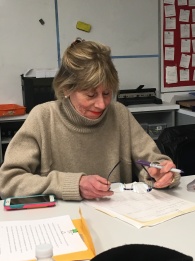
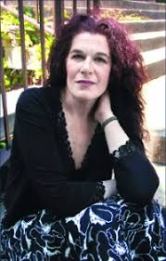

From left to right: Author, Amy Hest; Former Editor, Sharyn November, Author/Illustrator, Stephen Savage
Writing for Children III: Publishing 101 with Sharyn November, former editor, Viking Press (Special Introductory Price, $50.00, Online)
Registrants will participate in one online session. The class is meant for unpublished and self-published authors who want to better understand the first steps of marketing a work to publishers and the machinations of the editorial process. You’ll learn the basics for preparing query letters, agents, and the key actors who prepare a manuscript for publication, as well as how to find like-minded writers and promote yourself and your work.
Introduction to Illustration with Stephen Savage award winning illustrator of Where’s Walrus, Where’s Walrus and Penguin, Supertruck, Polar Bear Night and many other books. (Special Introductory Price, $50.00, Online)
Registrants will participate in two synchronous sessions which will introduce and explore the process and key concepts around illustration for children’s literature. The goal is to better understand the illustration process and how to develop basic strategies to set you on the road to illustrating your own projects.
Writing for Children classes lead by award winning author Amy Hest at Bank Street College
Writing for Children: Finding Your Voice
For beginners who want to write a children’s book. The class will focus on aspects of good story telling, writing, tone, dialogue and characters in a friendly and supportive environment.
Writing for Children II: Developing Your Manuscript
Now that you have found your voice. Refine your Manuscript.
The Writers Lab for Unpublished Authors
For a small group of committed writers who want to come together each month to share their works in progress and receive feedback from other committed writers.
You can also contact us at 212-875-4649 or cps@bankstreet.edu for more information.
Announcing the 2019 Cook Prize Semi-Finalists!
Keywords: STEM Books, Cook Prize 2019
We are delighted to announce the semi-finalists for the 2019 Cook Prize!
The Cook Prize is awarded to the best Science, Technology, Engineering and Math (STEM) picture book for 8-10 year olds. The Cook Prize is the only national children’s choice award honoring a STEM title.
Register Your Classes to Participate in the Selection of the 2019 Cook Prize
The four semi-finalists are!

Counting on Katherine by Helaine Becker; illustrated by Dow Phumiruk (Christy Ottaviano Books, Henry Holt and Company)
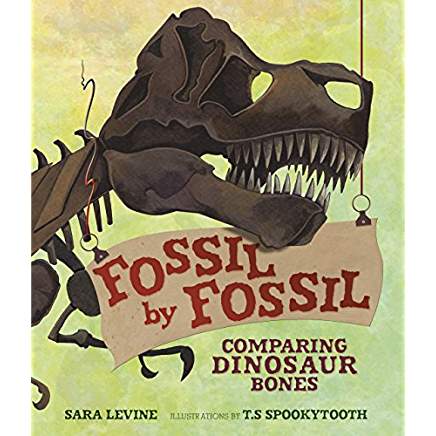
Fossil by Fossil: Comparing Dinosaur Bones by Sara Levine, illustrated by T.S. Spookytooth (Millbrook Press/Lerner)
 If Polar Bears Disappeared by Lily Williams (Roaring Brook Press)

Nothing Stopped Sophie: The Story of Unshakable Mathematician Sophie German by Cheryl Bardoe; illustrated by Barbara McClintock (Little, Brown and Company)
Register your classes to participate. Votes are due on April 19, 2019. We will send the link for voting in March. Note if during the deliberation process with your students you hear a particularly insightful or charming comment about one of the books, please share with us. We love to read these during the awards ceremony which will take place this year on May 16, 2019 at approximately 10:45 a.m. Please check back later for the link to the livestream. Contact cweill@bankstreet.edu to send anecdotes and for questions.
Thanks to our wonderful 2019 Cook Prize jury!

left to right: Lila Mortimer, Alumna, Bank Street College of Education; Jamie Wallach, American Museum of Natural History; Bilexis Casado, American Museum of Natural History; Robin Hummel, Bank Street College Graduate Faculty; Amy Withers, Bank Street College Graduate Faculty; Daniel Zieger, American Museum of Natural History
Bank Street College of Education’s Children’s Book Committee Announces Its Annual Awards!
Keywords: The Children’s Book Committee, Josette Frank, Claudia Lewis, Flora Stieglitz Straus


Children’s Book Committee – February 2019 Pick
Tangled Planet
Author: Kate Blair

A vivid account of humans in the far distant future, trying to settle a planet and leave their spaceship, home for hundreds of years.
Our Young Reviewer Says:
“This book was excellent. I’m not much of a sci-fi reader so I was surprised by how much I enjoyed this book. Its character development and complexity set it apart from novels of its kind and the depth of character relationships make it much more than a simple mystery.”
– Caroline, 15 years old, New Haven, CT.
Young people who are interested in reviewing are invited to do so as we welcome the individual perspective of our age appropriate readers. If you are interested in being a reviewer, contact bookcom@bankstreet.edu
See our past monthly picks.
Diverse Voices in Latinx Children’s Literature, Mini-Conference, Saturday, March 9, 2019
The Center for Children’s Literature at Bank Street College of Education is thrilled to announce its second mini-conference focusing on Latinx Children’s Literature. The event will take place this year at Bank Street’s 112th Street address.
Author and illustrator Duncan Tonatiuh will be our keynote speaker.

Duncan is the recipient of the Pura Belpré and Sibert medals as well as the Jane Addams Children’s Book Award. He is the author and illustrator of Undocumented: A Worker’s Fight (Abrams) Amalia Hernández and Mexico’s Folkloric Ballet (Abrams) The Princess and the Warrior: A Tale of Two Volcanoes (Abrams) as well as many other amazing books!
The conference is for adults and will be in English and is for Spanish and English speaking librarians, elementary school teachers, publishers, authors and parents who want to expand their knowledge and better serve their populations.
Thanks to KidLit TV portions of the program will also be live streamed.
Registration $55.00
Program
9:00 – 9:30
Breakfast and Registration
9:30 – 9:45
Opening Remarks:
Loida Garcia-Febo, President, American Library Association
9:45 – 10:30
Fantasy and Illustration in Graphic Novels and Comics
Raúl the Third, Lowriders Blast from the Past
Liniers Macanudo, Buenas Noches Planeta
Edgardo Miranda-Rodriguez, La Borinqueña
Moderator: Shelley Diaz, School Library Journal
10:30 – 11:20
Elevating Our Heroes Through Picture Books
Duncan Tonatiuh, Danza! Amalia Hernández and El Ballet Folklórico de México
Raul Colón, Miguel’s Brave Knight: Young Cervantes and His Dream of Don Quixote
Eric Velasquez, Schomburg: The Man Who Built the Library
Anika Aldamuy Denise, Planting Stories: The Life of Librarian and StoryTeller Pura Belpré
Rudy Gutierrez, Carlos Santana: Sound of the Heart, Song of the World
Moderator: Sonia Rodriguez, LaGuardia Community College
11:20– 12:20
Break
Lunch on Your Own
Book Sales
11:45 – 12:20
Author, Book Signing Begins
12:20 – 1:10
Soy yo: Developing Identities & Relationships in Latinx Coming-of-Age Stories
Pablo Cartaya, Marcus Vega Does n’t Speak Spanish
Emma Otheguy, Silver Meadows Summer (tentative)
Angela Dominguez, Stella Diaz Has Something to Say
Hilda Eunice Burgos, Ana Maria Reyes Does Not Live in a Castle
Aida Salazar, The Moon Within
Moderator: Carla España, Hunter College
1:10 – 1:30
Keynote: Duncan Tonatiuh
1:30 – 2:00
Authors Sign Books
To watch the livestream go to: https://kidlit.tv/LATINX2019
Bank Street College of Education is located at 610 West 112th Street between Riverside and Broadway. Take the 1 train to either 110th or 116th Streets. If you get on the 2 or 3 you will be several blocks out of your way. Note that the MTA does maintenance on the tracks most Saturdays. Give yourself extra time to arrive!
Books for Children in Spanish, Libros infantiles en español
The Children’s Book Committee and Center for Children’s Literature is delighted to share with you:
Los mejores libros infantiles en español del año 2019 para libros infantiles publicados o traducidos en 2018
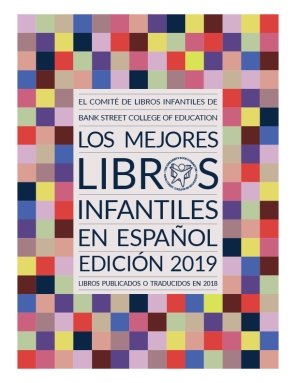

The Best Children’s Picture Books of the Year in Spanish 2019 for Picture Books Published or Translated in 2018
This list was created by native and non-native Spanish speaking members of the Children’s Book Committee as well as employees, alumnae and professors of Bank Street College. Each book received the same vigorous review as works submitted for our “Best Books of the Year” list in English.
Click here for a downloadable list.
 Bank Street College Center for Children's Literature